Introduction
Every second, someone somewhere needs blood. It could be an accident victim, a patient undergoing surgery, or someone battling a life-threatening illness. Blood donation is one of the simplest yet most powerful ways to save lives.
Yet, many people hesitate—due to myths, fear, or lack of awareness. This blog aims to change that.
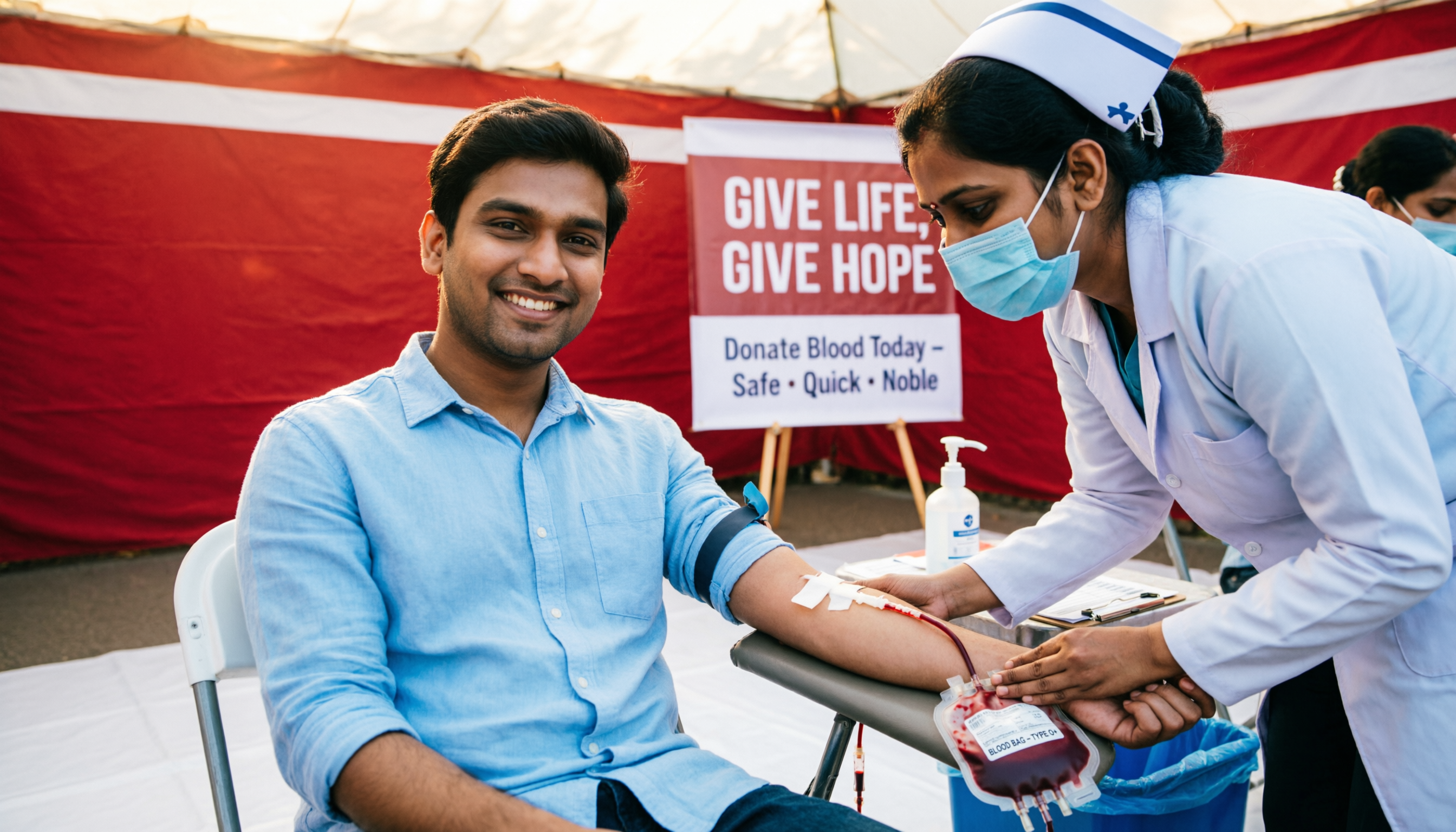
Why Blood Donation Matters
Blood cannot be manufactured—it can only come from generous donors.
Every 2 seconds, someone needs blood
One donation can save up to 3 lives
Blood is essential for:
Surgeries
Cancer treatment
Childbirth emergencies
Trauma care
Without donors, healthcare systems simply cannot function.
Who Can Donate Blood?
Most people can donate if they meet basic criteria:
Age: 18–65 years
Weight: At least 50 kg
Good overall health
No recent infections or major illnesses
Tip: Always consult medical staff before donating.
Benefits of Donating Blood
While saving lives is the biggest reward, donors also benefit:
Free health check-up
Improved blood circulation
Burns calories
Emotional satisfaction
But the real impact?
Knowing you gave someone another chance at life.
Frequently Asked Questions (FAQ)
1. Is blood donation safe?
Yes. It is done using sterile equipment under medical supervision.
2. How often can I donate?
Every 3 months for whole blood donation.
3. Will I feel weak after donating?
Most people feel normal within a few hours.
4. How long does the process take?
Around 30–45 minutes.
5. Can women donate blood?
Yes, if they meet the health requirements.
6. Do I need to fast before donating?
No. In fact, eating a healthy meal before donating is recommended.